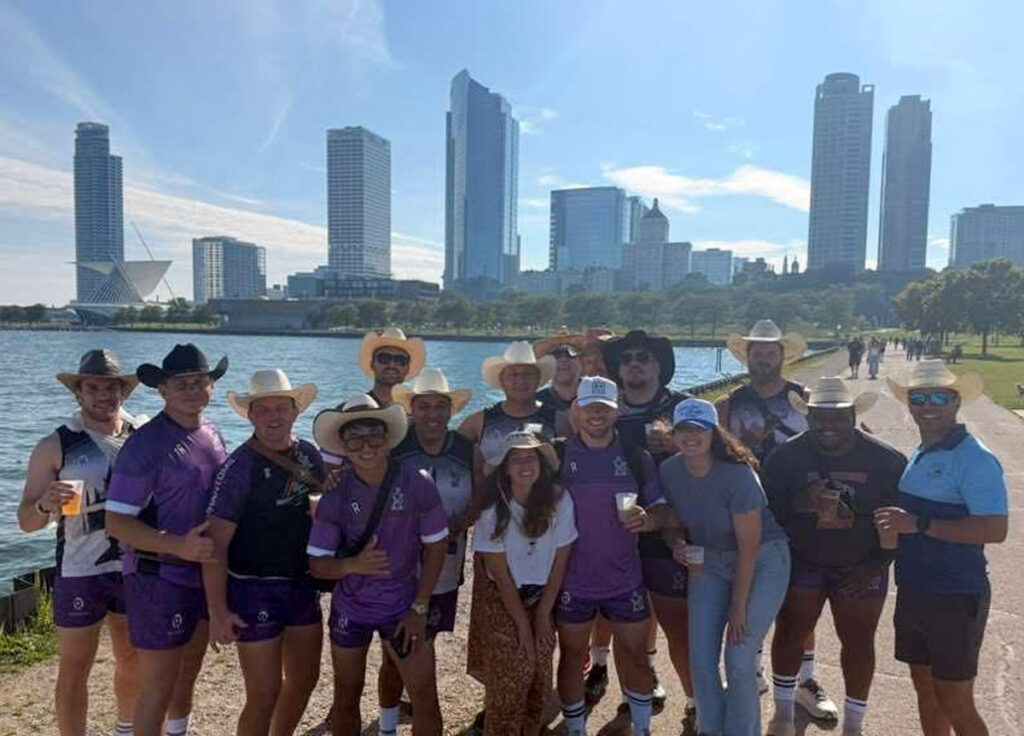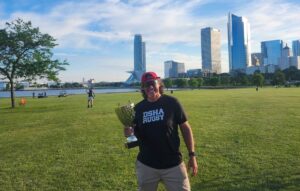
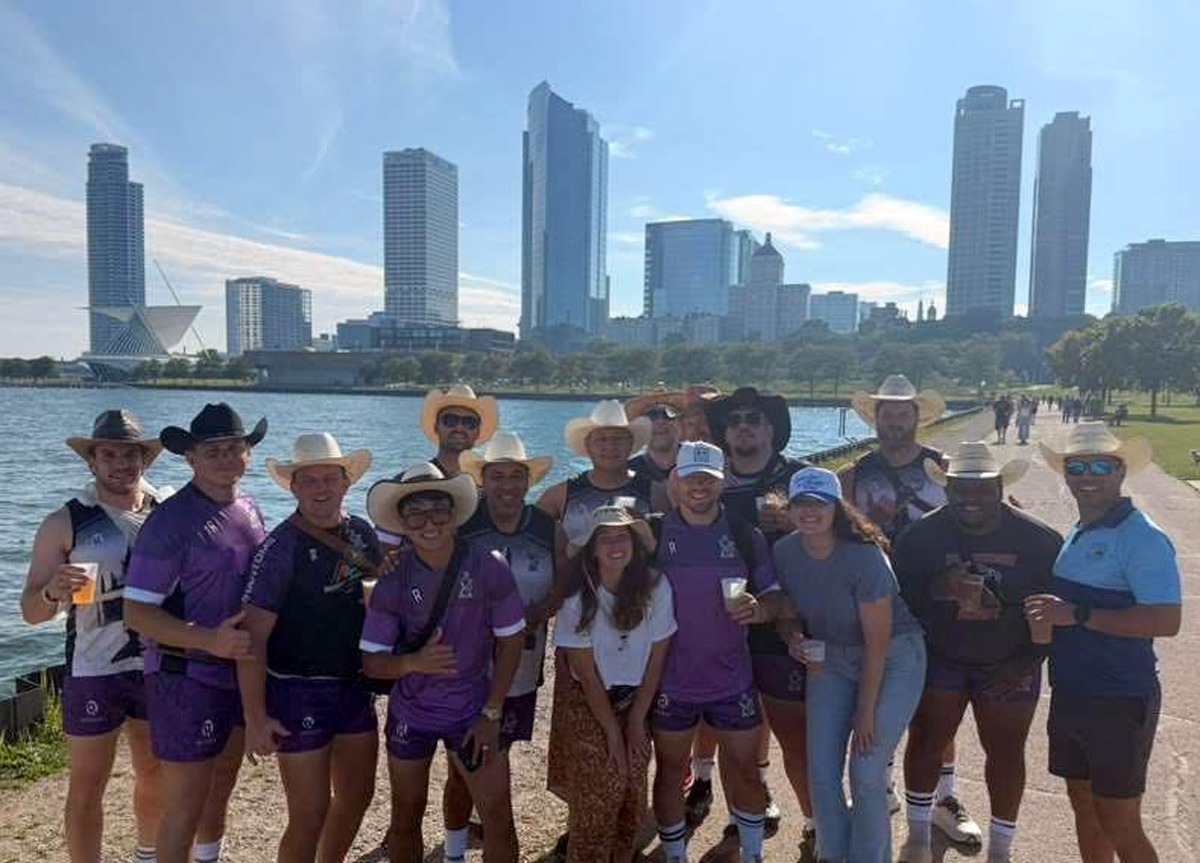

In 2004, the Hot Rod Lincolns made their Lakefront 7s debut and took home the tournaments biggest trophy.
The Hot Rods returned in 2026. We asked Coach Jay Arbizu — who also featured on the 2004 tour — to reflect on the tournament, and on rugby sevens, a generation later.
LF7s: It’s been 22 years since you last attended the Lakefront 7s. How does it feel to be back in Milwaukee with the Hot Rod Lincolns?
JA: It was a great return trip and a little bit surreal to kind of see everything and remember everything again. And the tournament seems much larger now. I’m not sure if that’s true or not but that’s the way it seemed to me.
LF7s: What is the biggest change you noticed when you first arrived on Saturday?
JA: I thought the setup used to be closer to the roadsides only because I seem to remember that we parked the RV there on Friday night and we were able to walk back and forth to it between games and this go round seemed a lot further over.
LF7s: What changes have impressed you the most over the past 22 years?
JA: It had a real impressive festival atmosphere this go round. And a heck of a lot of good talent out there as well.
Also, I don’t seem to remember a theme at the 2004 tournament. Everyone was wearing cowboy hats, especially the staff and supporters, but that was very cool to see.
Finally, this go round had a lot more music and vendors and things like that going on.
LF7s: Is there anything missing this year that stood out back in 2004?
JA: I thought there was going to be a playoff match for 3rd place. That’s probably on me for not paying more attention to that upfront.
LF7s: What parts of the Lakefront 7s experience still feel exactly the way you remember them from 2004?
JA: The grass is nice and green and soft. And when you get into the shade it feels about 10° cooler than it is when you’re just in the direct sun.
And just the general vibe of friendly people and good rugby.
LF7s: Your team has played in many events over the past 25 years. How has the game of rugby sevens in North America evolved in that time, and do you see those changes reflected at Lakefront 7s today?
JA: I think the game has really gotten younger because more clubs and teams are organized with youth sides. So you might have somebody who’s 17 with five or eight years of experience already whereas back in the day most people that had 5 years of experience would be around 30 years old.
It seems like most people back then would pick it up in college in the later years so maybe they’re 22 years old and so by the time they get that rugby IQ and really start to become good at it, they’re in their late 20s or hitting there early 30s.
But nowadays it’s great to see some of those teenagers with more and more experience and that was definitely reflected at the Lakefront Sevens tournament. Even in the competitive bracket there were quite a few younger players that we could tell already had some pretty good experience.
And it seemed like a lot more women’s teams were there this go round as well.
So I really think the sport is growing and Lakefront 7s is a big part of helping that happen.
LF7s: What’s the overall message you are bringing back to your club regarding this past weekend?
JA: Our big message from the tour side was that we started too slow. I think we played our best game of the day in the third match, but that was also probably the best all-around team that we played that day, so we ended up losing.
And for us we always talk about the rhythm of sevens which means we need to be peeking around game three and four and we really need to fight our way through games one and two.
And we also are considering a “reverse tour” And that would basically be like coming in on Friday and then playing on Saturday and then sticking around a few extra days for the fun and shenanigans. And that’s something we have thought about for a few years and then this year we had a few pre-tournament injuries that I think are really helping us push the reverse tour idea forward again.